
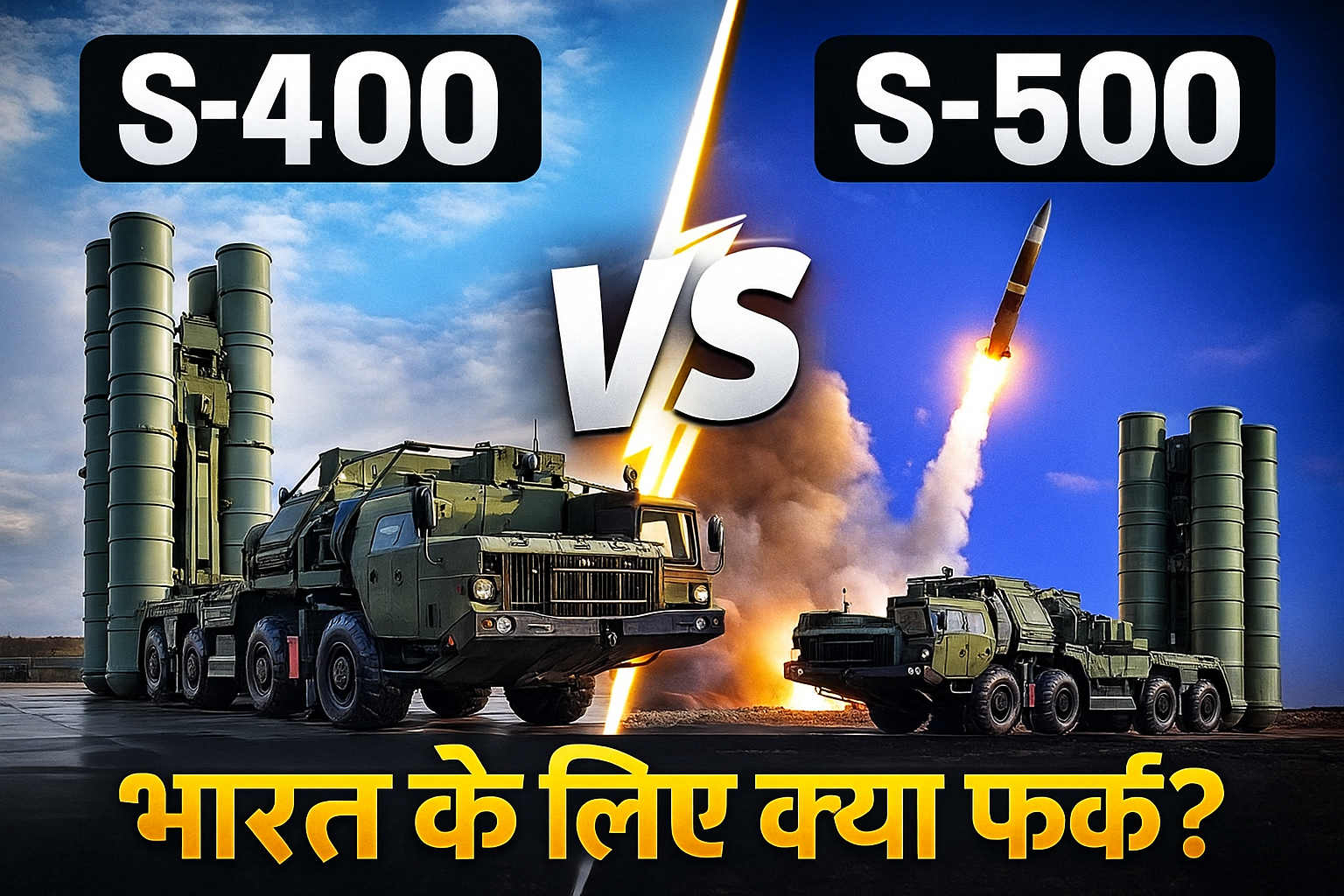
S-400 vs S-500 : Introduction
s-400 vs s-500 भारत तेजी से बदलते वैश्विक सुरक्षा माहौल का सामना कर रहा है, जहां मिसाइल तकनीक, हाइपरसोनिक हथियार और स्पेस-बेस्ड खतरों की भूमिका लगातार बढ़ रही है. ऐसे समय में रूस की दो अत्याधुनिक एयर डिफेंस प्रणालियाँ, S-400 और S-500, भारत की रक्षा रणनीति का महत्वपूर्ण हिस्सा बन सकती हैं. S-400 पहले से भारत में सक्रिय है, जबकि S-500 भविष्य की पीढ़ी की प्रणाली मानी जा रही है. इस लेख में हम इन दोनों प्रणालियों की रेंज, टार्गेट क्षमता और भारत के लिए इनके वास्तविक महत्व को विस्तार से समझेंगे.
India is facing a rapidly evolving global security environment where missile technology, hypersonic weapons and space-based threats are growing rapidly. In this scenario, Russia’s two advanced air defence systems, the S-400 and the S-500, could shape India’s defence strategy. The S-400 is already operational in India, while the S-500 is viewed as a next-generation system. This article explains in detail the range, target capabilities and real significance of both systems for India.
Understanding the S-400 System
What Makes S-400 Unique
S-400 Triumph को दुनिया के सबसे उन्नत एयर डिफेंस सिस्टम में गिना जाता है. यह अपनी मल्टी-लेयर मिसाइल संरचना के कारण किसी भी दिशा से आने वाले खतरों को विभिन्न दूरी पर रोक सकता है. इसकी खासियत यह है कि एक ही सिस्टम चार अलग-अलग रेंज की मिसाइलें लॉन्च कर सकता है, जिससे सुरक्षा की परतें कई गुना बढ़ जाती हैं.
The S-400 Triumph is considered one of the world’s most advanced air defence systems. Thanks to its multi-layered missile structure, it can intercept threats approaching from different directions and at varying distances. Its key strength is that a single system can launch four different types of missiles, creating multiple defensive layers.
S-400 Range
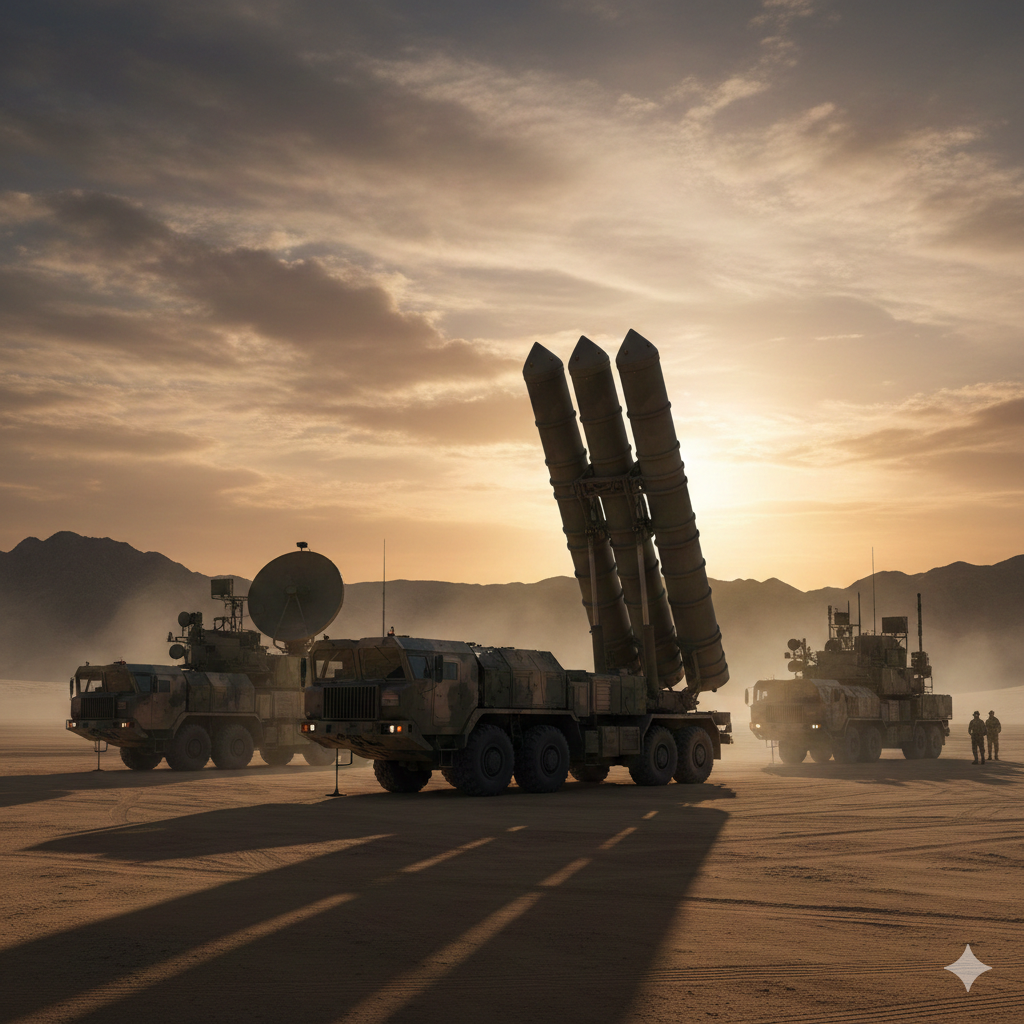
S-400 की मिसाइलें 40 किमी से लेकर 400 किमी तक की दूरी तक मार कर सकती हैं. सबसे लंबी रेंज वाली 40N6E मिसाइल 400 किमी दूर टार्गेट को मारने में सक्षम है. वहीं इसकी 250 किमी, 120 किमी और 40 किमी रेंज वाली मिसाइलें नजदीक और मध्यम दूरी के खतरों को संभालती हैं.
The S-400’s missiles can engage targets ranging from 40 km to 400 km. The longest-range missile, the 40N6E, can hit targets up to 400 km away. The other missiles with 250 km, 120 km and 40 km ranges handle threats at medium and short distances.
S-400 Target Capability
S-400 फाइटर जेट, अटैक हेलीकॉप्टर, ड्रोन, UAV, क्रूज़ मिसाइल और मध्यम दूरी की बैलिस्टिक मिसाइल जैसे टार्गेट को सफलतापूर्वक रोक सकता है. हालांकि यह हाइपरसोनिक हथियारों या स्पेस के नजदीक उड़ रहे लो-ऑर्बिट सैटेलाइट को रोकने में सक्षम नहीं है.
The S-400 can effectively intercept fighter jets, attack helicopters, drones, UAVs, cruise missiles and medium-range ballistic missiles. However, it is not designed to neutralize hypersonic weapons or low-orbit satellites.
Understanding the S-500 System
What Makes S-500 a Next-Gen System
S-500 Prometey रूस की नई पीढ़ी की एयर एंड स्पेस डिफेंस सिस्टम है. इसे न सिर्फ हवाई खतरों बल्कि अंतरिक्ष से आने वाले खतरों को भी नष्ट करने के लिए बनाया गया है. इसमें ऐसे सेंसर, रडार और मिसाइल सिस्टम हैं जो पूरी तरह से भविष्य के युद्ध परिदृश्य के अनुसार विकसित किए गए हैं.
The S-500 Prometey is Russia’s next-generation air-and-space defence system. It is designed not only to counter aerial threats but also to neutralize threats emerging from space. It incorporates advanced sensors, radars and missile systems tailored for future warfare environments.
S-500 Range
S-500 की रेंज 500 किमी से 600 किमी तक मानी जाती है, जो S-400 से काफी अधिक है. यह 180 से 200 किमी ऊंचाई पर उड़ रहे लो-ऑर्बिट स्पेस टार्गेट को भी इंटरसेप्ट कर सकता है. यह क्षमता इसे दुनिया की सबसे खास डिफेंस प्रणालियों में शामिल करती है.
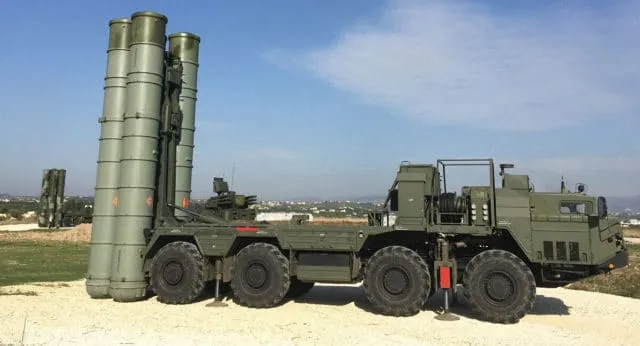
The S-500’s range is estimated between 500 km and 600 km, significantly higher than the S-400. It can intercept low-orbit space targets at altitudes of 180–200 km, placing it among the most advanced defence systems in the world.
S-500 Target Capability
S-500 इंटरकॉन्टिनेंटल बैलिस्टिक मिसाइल (ICBM), हाइपरसोनिक ग्लाइड व्हीकल, स्टेल्थ एयरक्राफ्ट, स्पेस-बेस्ड हथियार और लो-ऑर्बिट सैटेलाइट को भी मार गिरा सकता है. यह क्षमता S-400 से कई पीढ़ी आगे है.
The S-500 can destroy intercontinental ballistic missiles (ICBMs), hypersonic glide vehicles, stealth aircraft, space-based weapons and low-orbit satellites. These capabilities place it several generations ahead of the S-400.
S-400 vs S-500: Technical Comparison
Range & Altitude
जहां S-400 की अधिकतम रेंज 400 किमी है, वहीं S-500 600 किमी तक के टार्गेट को हिट कर सकता है. ऊंचाई में भी बड़ा फर्क है: S-400 लगभग 30 किमी ऊंचाई तक टार्गेट इंटरसेप्ट करता है, जबकि S-500 200 किमी तक की ऊंचाई पर काम कर सकता है.
While the S-400’s maximum range is 400 km, the S-500 can strike targets up to 600 km away. In altitude too, the difference is huge: the S-400 intercepts targets up to around 30 km, while the S-500 can operate up to 200 km.
Hypersonic Threat Defence
हाइपरसोनिक हथियार भविष्य का सबसे बड़ा खतरा माने जा रहे हैं. S-400 इन हथियारों को सीमित क्षमता के साथ रोक सकता है, लेकिन S-500 खासतौर पर हाइपरसोनिक मिसाइलों को निशाना बनाने के लिए डिजाइन किया गया है.
Hypersonic weapons are considered the biggest threat of the future. The S-400 can counter them only to a limited extent, while the S-500 is specifically designed to engage hypersonic missiles.
Space Defence Capability
S-400 स्पेस टार्गेट को नहीं रोक सकता, जबकि S-500 लो-ऑर्बिट सैटेलाइट और स्पेस-बेस्ड मिसाइल को इंटरसेप्ट करने में सक्षम है. यह क्षमता भारत जैसे देश के लिए बेहद महत्वपूर्ण है, जिसे भविष्य में स्पेस डोमेन से भी चुनौतियाँ मिल सकती हैं.
The S-400 cannot counter space-based targets, whereas the S-500 can intercept low-orbit satellites and space-based missiles. This capability is crucial for India, which may face future threats originating from the space domain.
Why India Needs Both: A Layered Defence Strategy
Present Needs vs Future Needs
फिलहाल भारत की जरूरतें मुख्य रूप से एयर डिफेंस पर केंद्रित हैं, जिसे S-400 अच्छी तरह संभालता है. लेकिन भविष्य में युद्ध के रूप बदल रहे हैं. हाइपरसोनिक मिसाइलें, स्पेस-बेस्ड हथियार और लंबी दूरी के स्ट्राइक सिस्टम आने वाले दशक की वास्तविकताएँ होंगे.
India’s current security needs are centered around air defence, which the S-400 handles effectively. However, warfare is evolving. Hypersonic missiles, space-based weapons and long-range strike systems will define the next decade.
China Factor
चीन हाइपरसोनिक मिसाइलों और स्पेस तकनीक में तेजी से आगे बढ़ रहा है. भारत को उसके मुकाबले में संतुलन बनाए रखने के लिए S-500 जैसी उन्नत प्रणाली की आवश्यकता पड़ सकती है.
China is rapidly advancing in hypersonic missile and space technologies. To maintain strategic balance, India may require a system like the S-500 in the coming years.
Ballistic Missile Defence
भारत पहले ही अपना बैलिस्टिक मिसाइल डिफेंस (BMD) प्रोग्राम चला रहा है, लेकिन S-500 जैसी प्रणाली इसे और मजबूत कर देगी. यह कई स्तरों पर आने वाले खतरों से एक साथ सुरक्षा दे सकती है.
India already has its own Ballistic Missile Defence (BMD) program, but a system like the S-500 would significantly enhance it. It can protect against multi-layered threats simultaneously.
S-400 vs S-500 : Comparison Table
नीचे दी गई तालिका दोनों प्रणालियों का सार प्रस्तुत करती है.
The table below summarises the major differences.
| Feature | S-400 | S-500 |
|---|---|---|
| Max Range | 400 km | 600 km+ |
| Target Altitude | 30 km | 200 km |
| Hypersonic Intercept | Limited | Strong |
| Anti-Satellite | No | Yes |
| ICBM Defence | Limited | Strong |
| India Status | In service | Future interest |
S-400 vs S-500 : Conclusion
S-400 भारत को वर्तमान हवाई खतरों से सुरक्षित रखता है और उसकी एयर डिफेंस क्षमता को मजबूत करता है. लेकिन बदलती तकनीक और भविष्य के युद्ध परिदृश्यों को देखते हुए S-500 भारत के लिए एक रणनीतिक आवश्यकता बन सकता है. यह सिर्फ हवाई खतरों से सुरक्षा नहीं देगा, बल्कि स्पेस और हाइपरसोनिक मिसाइलों के खिलाफ भी एक ढाल बनकर उभरेगा.
The S-400 protects India from current aerial threats and strengthens its air defence capabilities. But considering evolving technologies and future warfare scenarios, the S-500 may become a strategic necessity. It will not only counter aerial threats but also shield India from space-based and hypersonic missile challenges.